

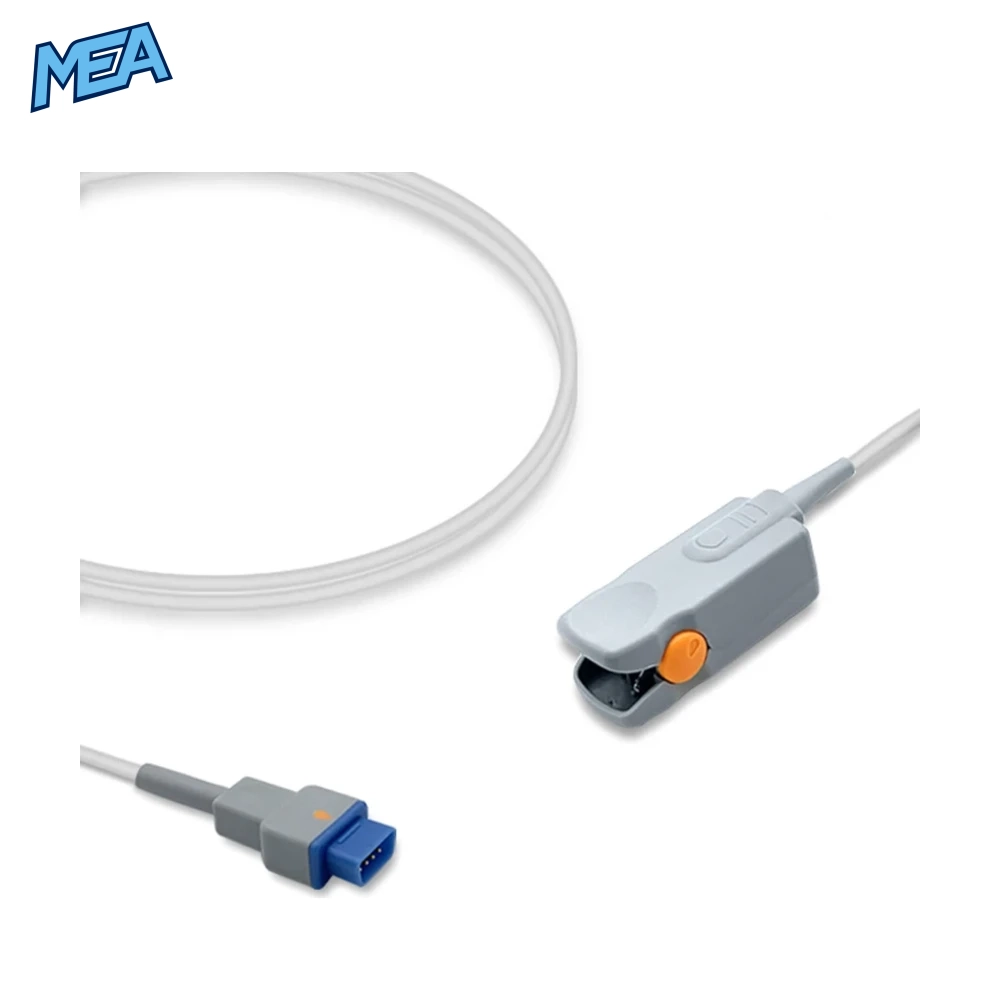
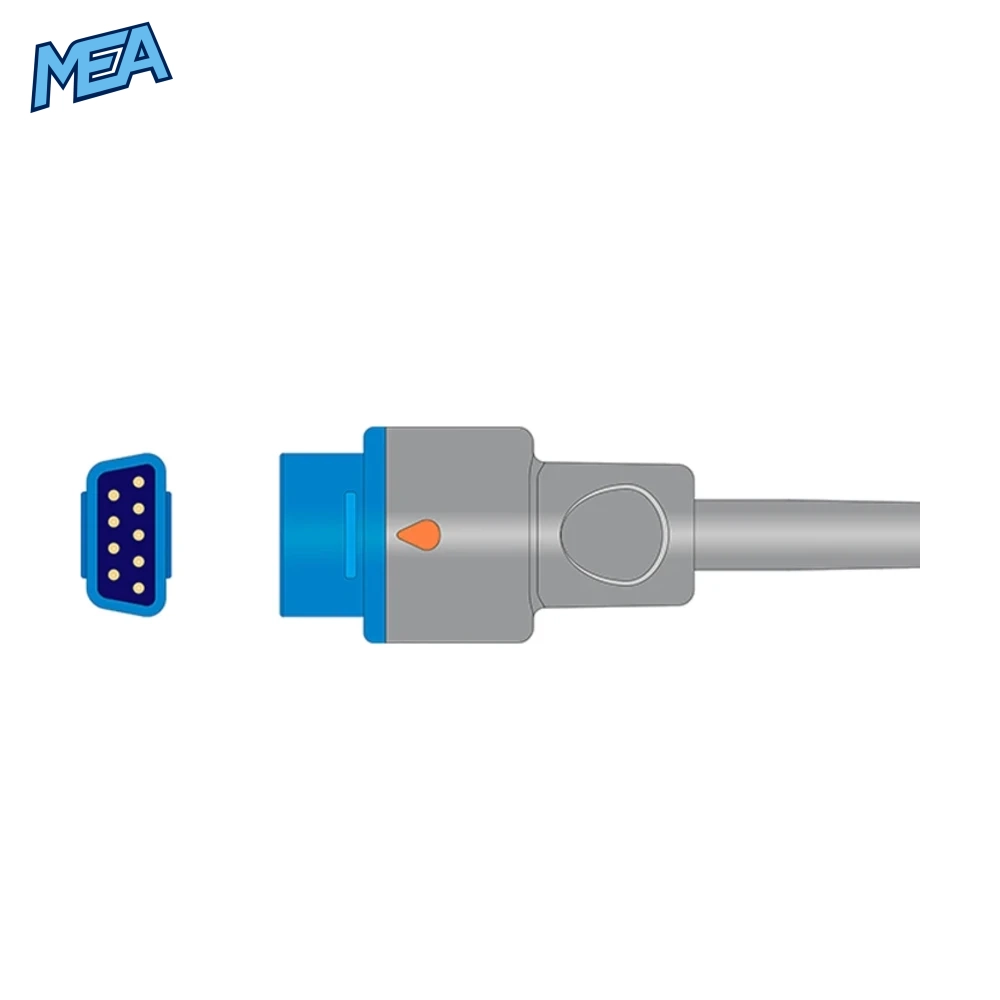


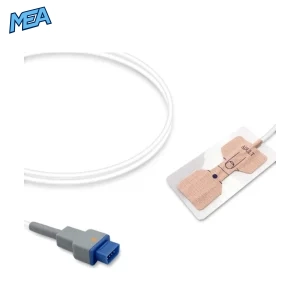
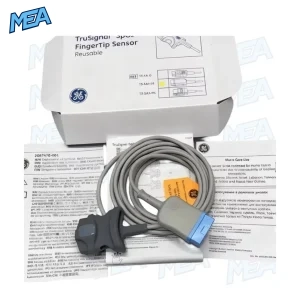
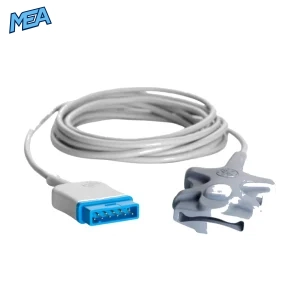
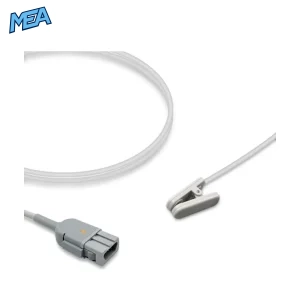
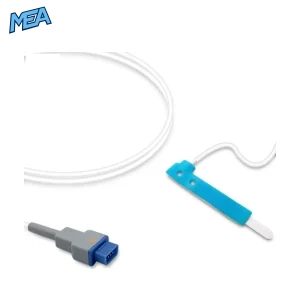
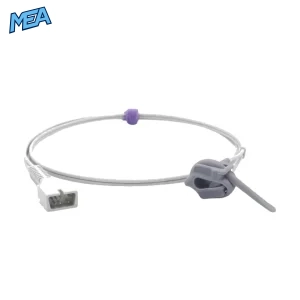
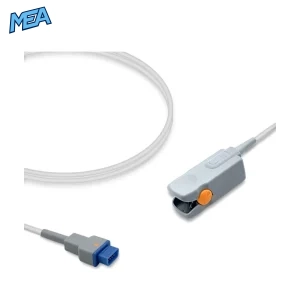
The GE TS-F-D SpO2 sensor is a reusable adult hard-shell pulse oximetry sensor built around Trusignal photodetector technology. It attaches to the fingertip to capture blood oxygen saturation (SpO2) and pulse rate, sending the signal through a 1.0m cable to a 9-pin oximetry connector. It is designed for use with GE Healthcare and Datex-Ohmeda patient monitors that accept the TS-F-D / Unimed U403-117 reference sensor, and ships in New condition, one sensor per bag, backed by a 12-month warranty.
Key Features & Benefits
- Trusignal sensor technology engineered for stable, low-noise SpO2 and pulse rate signal capture during continuous monitoring.
- Adult hard-shell fingertip design a rigid clip housing that seats securely on adult fingers for consistent contact and reduced signal drop-out.
- Reusable construction built to be cleaned and reapplied across multiple patients, lowering the per-use cost compared with disposable sensors.
- 1.0m sensor cable gives clinicians practical working distance from the fingertip to the monitor bedside cable or extension.
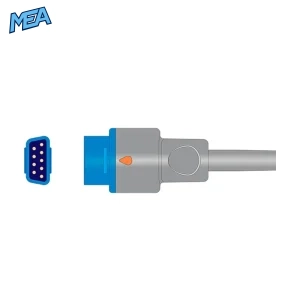
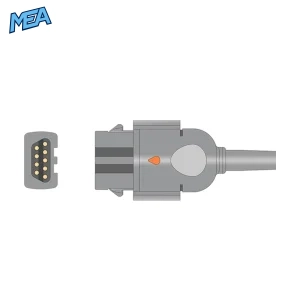
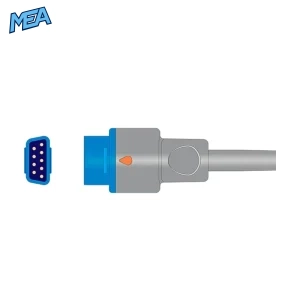
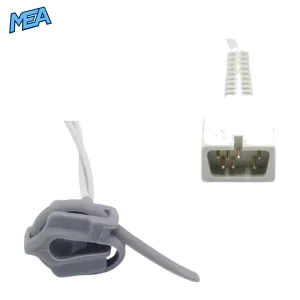
- 9-pin oximetry connector matches the GE Healthcare / Datex-Ohmeda TruSignal connector pattern for straightforward setup.
- 12-month warranty supplied New, one sensor per bag (1 pcs/bag), with manufacturer certifications noted below.
Technical Specifications
| Specification | Detail |
|---|---|
| Sensor Type | Hard shell, fingertip clip |
| Patient Size | Adult |
| Cable Length | 1.0m |
| Lifecycle | Reusable |
| SpO2 Technology | GE Trusignal |
| Reference / Cross-Match Number | GE Healthcare TS-F-D; Unimed U403-117 |
| Connector | 9-pin oximetry connector |
| Condition | New |
| Unit / Packaging | 1 pcs/bag |
| Warranty | 12 Months |
Where This SpO2 Sensor Is Used
This adult hard-shell sensor is intended for clinical environments where continuous or spot-check pulse oximetry is required, including:
- Hospital general wards and step-down units
- Intensive care units (ICU) and critical care
- Operating rooms and post-anesthesia care
- Emergency departments
- Outpatient and diagnostic monitoring clinics
Works With GE Healthcare & Datex-Ohmeda Monitor Families
The TS-F-D / U403-117 reference sensor is used with a broad range of GE Healthcare and Datex-Ohmeda monitors that accept a TruSignal-pattern SpO2 input, including:
- Datex-Ohmeda: 3775, 37xx Series, 3800, 3900, 3900P, 4700, 5250, AS/3 (with M-OSAT module), Cardiocap/5, CS/3 (with M-OSAT module), E-PRESTN, i4 (with E-series modules), S/5 (with E-series or M-OSAT module), TruSignal, TuffSat
- GE Healthcare: 259, Aisys, Aisys CS2, B20, B20i, B40, Carescape B650, CARESCAPE ONE 1, Carescape V100, CARESCAPE Canvas, DINAMAP B125
Always confirm the exact monitor model and connector against your equipment’s SpO2 port before ordering.
Cleaning & Reuse
As a reusable sensor, the hard-shell housing can be wiped down and disinfected between patients following your facility’s standard infection-control protocol, supporting repeated use without single-use waste.
Frequently Asked Questions
What monitors does the GE TS-F-D SpO2 sensor work with?
It is designed for GE Healthcare and Datex-Ohmeda monitors that accept the TS-F-D / Unimed U403-117 reference sensor, including the Datex-Ohmeda S/5, Cardiocap/5, and TruSignal families, and GE Carescape and DINAMAP B125 monitors. Confirm your monitor’s exact model before ordering.
Is this SpO2 sensor reusable or disposable?
It is reusable. The hard-shell fingertip clip is designed to be cleaned and reapplied across multiple patients, rather than discarded after one use.
What patient size is this sensor for?
This sensor is sized for adult patients.
How long is the sensor cable?
The cable measures 1.0m from the fingertip sensor to the 9-pin connector.
What condition is the sensor supplied in, and is there a warranty?
It is supplied New, packaged one sensor per bag (1 pcs/bag), and covered by a 12-month warranty.
What does “Trusignal” technology mean for this sensor?
Trusignal refers to the photodetector signal technology built into the sensor, designed to support stable SpO2 and pulse rate readings during continuous patient monitoring.
Reviews
There are no reviews yet.