

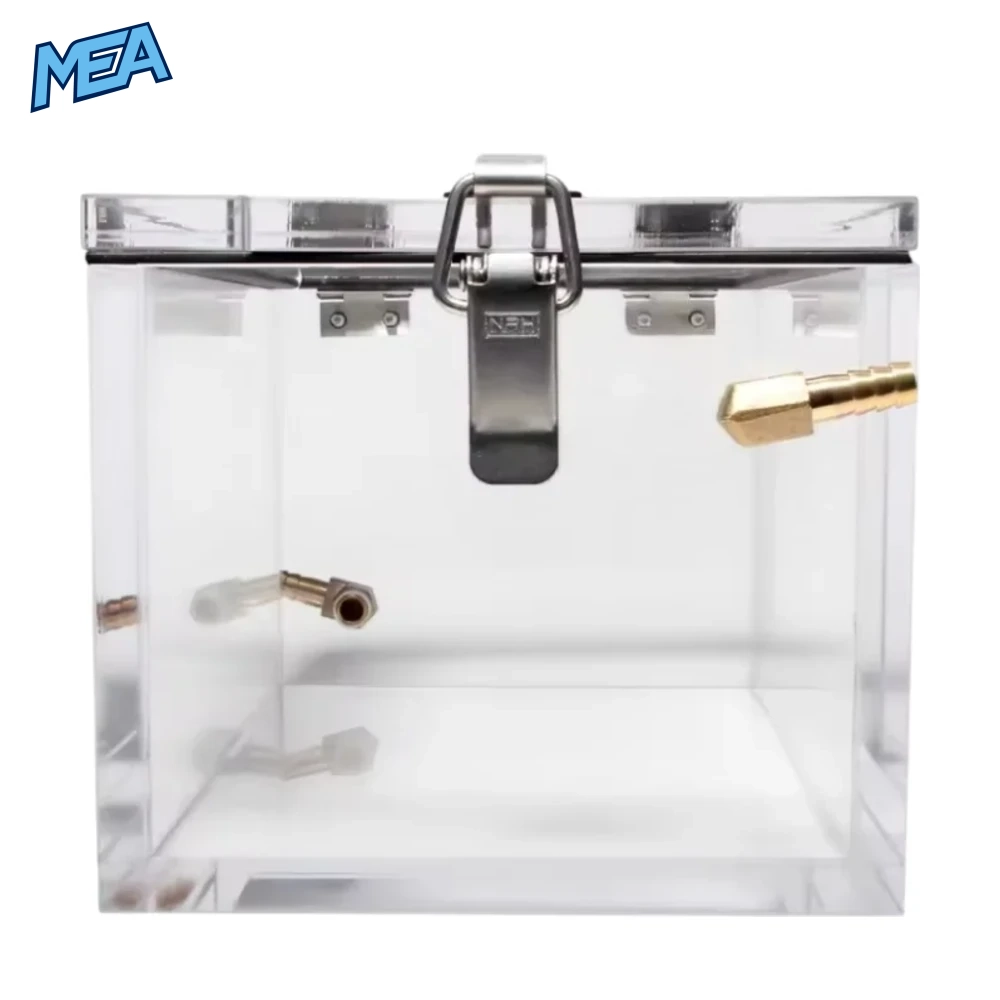


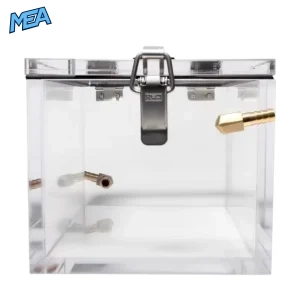
An animal anesthesia induction chamber is a transparent acrylic enclosure used in veterinary and laboratory settings to safely sedate small animals such as mice, rats, rabbits, and other rodents with inhalant anesthetic gases like isoflurane before surgery or handling.
This 220 x 160 x 120mm induction box provides a sealed, see-through environment that lets veterinary staff and researchers monitor the animal’s anesthetic state in real time while minimising stress and handling risk.
Primary Applications
- Pre-surgical anesthesia induction for rodents and small animals before switching to a mask or nose cone for maintenance anesthesia
- Veterinary clinic sedation for minor procedures, examinations, or diagnostic imaging
- Laboratory animal research, where consistent, humane anesthesia protocols are required
- Humane euthanasia, using the same chamber with CO₂ gas when an animal must be sacrificed at the end of a study, in line with animal welfare standards
Key Features of This Acrylic Induction Box
Transparent, Durable Construction
Built from 10mm-thick organic glass (acrylic), the chamber combines strength with full visibility, so staff can continuously observe breathing rate, posture, and consciousness level without opening the box and breaking the gas seal.
Reliable Gas Containment
- Airtight seal design prevents anesthetic gas leakage
- Fits waste gas scavenging systems via the outlet port, reducing operator exposure to residual anesthetic gas
- Sturdy hinges and latch system maintain a consistent seal during induction
Fast, Low-Stress Induction
- Achieves anesthetic effect in approximately 1–2 minutes
- Reduces the need for physical restraint, lowering stress and injury risk for both animal and handler
- Suitable as a preliminary induction step before mask-based maintenance anesthesia
Customisable Design
- Standard size fits large mice, rats, and similarly sized small animals
- Dimensions and port configurations can be customised on request
- Additional modifications available for specific lab or clinical workflows
Technical Specifications
| Specification | Detail |
| Product Name | Animal Anesthesia Induction Chamber |
| Dimensions | 220 x 160 x 120mm (8.66 x 6.3 x 4.72 in) |
| Material | Organic glass (acrylic) |
| Wall Thickness | 10mm |
| Target Species | Dogs, cats, mice, rats, rabbits, and similarly sized small animals |
| Best Suited For | Large mice and comparable small rodents |
| Gas Fitment | Isoflurane and other inhalant anesthetic gases; CO₂ for euthanasia |
| Waste Gas Port | Yes, connects to anesthetic waste gas removal / scavenging system |
| Customisation | Available on request |
Why Choose This Anesthesia Induction Box
- Clear visual monitoring the fully transparent acrylic body lets staff track the anesthesia stage without interrupting the process
- Safer working environment the waste gas outlet supports scavenging equipment, helping keep anesthetic gas away from the surrounding air and reducing operator exposure
- Dual-purpose design usable for both induction anesthesia and, when required, humane CO₂ euthanasia in the same chamber
- Built to last the 10mm acrylic wall thickness supports repeated use in busy clinical or lab settings
- Flexible sizing available in standard or custom dimensions to match different species and workflow needs
Frequently Asked Questions
What is an anesthesia induction chamber used for?
It’s used to sedate small animals with inhalant anesthetic gas before surgery, examination, or other procedures, offering a low-stress alternative to manual restraint for injection-based anesthesia.
How long does induction take in this chamber?
Most animals reach an anesthetized state within approximately 1–2 minutes of gas exposure inside the chamber.
What material is the induction box made from, and why does it matter?
The chamber is made from 10mm-thick organic glass (acrylic). This thickness provides structural durability and an airtight seal, while the transparency allows continuous visual monitoring of the animal.
Can this chamber be used for euthanasia as well as anesthesia?
Yes. The same chamber can be connected to a CO₂ source for humane euthanasia at the end of a procedure or study, in accordance with standard animal welfare practices.
What animals is this induction chamber suitable for?
It’s designed for small animals such as mice, rats, rabbits, and other similarly sized species, and is also referenced for use with dogs and cats. It’s best suited for large mice and comparably sized rodents.
Does this chamber work with a waste gas scavenging system?
Yes. The chamber includes an outlet port that connects to a waste anesthetic gas removal device, helping prevent gas from being released into the room or inhaled by staff.
Can the size of the induction chamber be customised?
Yes. While the standard size is 220 x 160 x 120mm, the manufacturer supports custom dimensions and additional design modifications based on specific requirements.
Why choose an acrylic induction chamber over other materials?
Acrylic (organic glass) offers a strong, shatter-resistant, and fully transparent alternative to glass, making it easier to monitor the animal during induction while maintaining an airtight seal for gas containment.
Reviews
There are no reviews yet.