


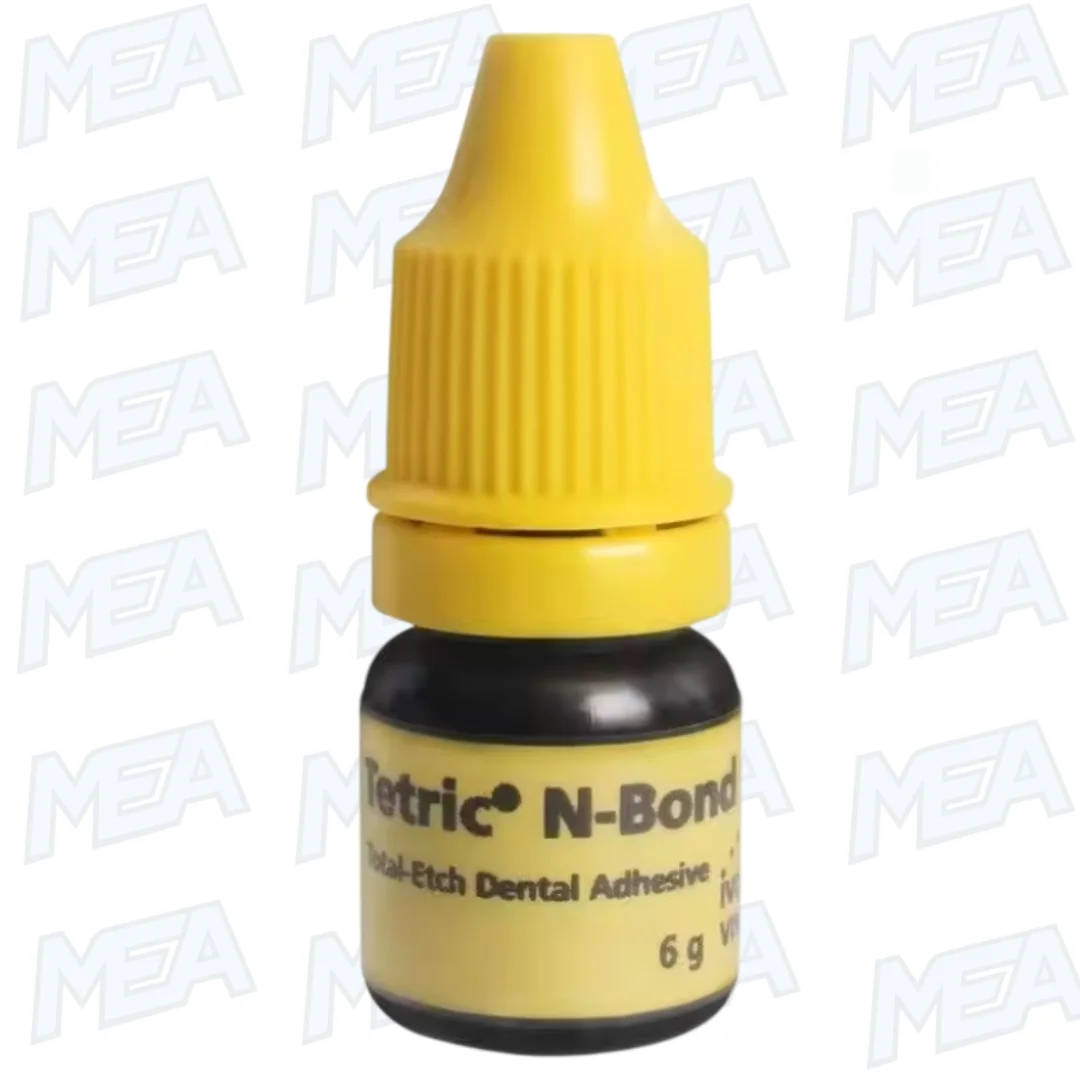
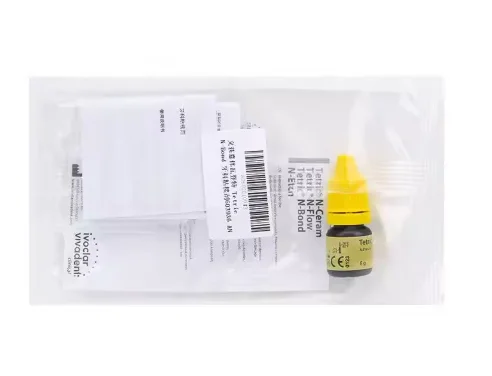
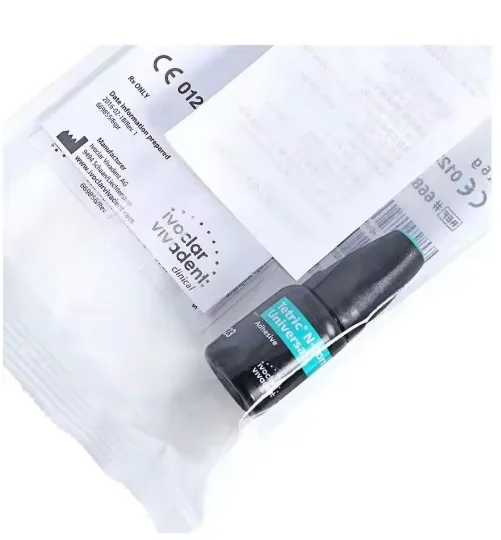
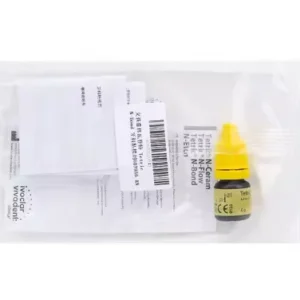
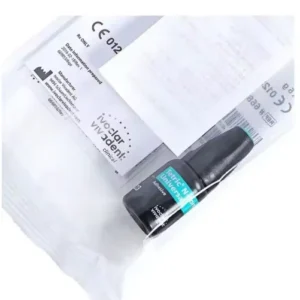
The Ivoclar Vivadent Tetric N-Bond Universal 6 g dental adhesive system developed by Ivoclar Vivadent is designed to deliver predictable bonding performance across a wide range of restorative procedures. Engineered for modern clinical workflows, this light-curing adhesive supports efficient, reliable bonding for both direct and indirect restorations while maintaining superior bond strength and ease of handling.
Dental professionals demand materials that balance performance, versatility, and simplicity. This universal bonding agent meets those requirements by offering compatibility with multiple etching techniques, reliable adhesion to enamel and dentin, and optimized viscosity for controlled application.
Available in Generation V and Generation VIII variants, the adhesive system supports diverse clinical protocols, making it suitable for practices seeking flexibility without sacrificing clinical outcomes.
This professional dental bonding solution is widely used in restorative dentistry for composite restorations, ceramic applications, repair procedures, dentin desensitization, and cavity sealing prior to restoration placement.
Overview
Product Name: Tetric N-Bond Universal Dental Adhesive
Brand: Ivoclar Vivadent
Packaging: 6 g per bottle
Variants Available: Generation V / Generation VIII
Curing Method: Light-cure adhesive system
Category: Dental bonding agent / composite adhesive
Application: Direct and indirect restorative bonding
This universal dental bonding adhesive simplifies adhesive dentistry by enabling clinicians to use a single bonding material across multiple restorative scenarios. The adhesive forms a durable hybrid layer, ensuring long-lasting retention of restorations.
The optimized formula ensures controlled wetting of enamel and dentin surfaces, resulting in high marginal integrity and reduced risk of postoperative sensitivity.
Designed for Modern Adhesive Dentistry
Contemporary dentistry relies heavily on adhesive systems capable of bonding to multiple restorative substrates. Whether working with composites, ceramic restorations, or resin cores, clinicians require materials that provide reliable adhesion while minimizing technique sensitivity.
The Tetric N-Bond Universal adhesive addresses these needs through:
- High bond strength to enamel and dentin
- Compatibility with light-cured and dual-cured composites
- Easy handling properties
- Reduced postoperative sensitivity
- Reliable marginal sealing
- Clinical versatility
These attributes help practitioners achieve predictable restorative outcomes while maintaining workflow efficiency.
Key Clinical Benefits
Universal Application Capability
This bonding adhesive can be used for both direct and indirect restorative procedures, reducing inventory complexity in dental clinics.
Strong Enamel and Dentin Bond
Optimized chemical formulation ensures strong adhesion to etched enamel and moist dentin surfaces.
Light-Curing Efficiency
The adhesive polymerizes quickly under curing lights, saving chair time while ensuring dependable bonding.
Reduced Sensitivity Risk
Proper dentin sealing helps minimize postoperative discomfort for patients.
Controlled Application
Balanced viscosity allows smooth spreading without excessive pooling or dripping.
Clinical Applications
The adhesive is suitable for numerous dental procedures, including:
Direct Composite Restorations
Used for bonding light-cured composite fillings in anterior and posterior restorations.
Ceramic and Composite Inlays
Provides secure adhesion for indirect restorations such as inlays and onlays.
Veneer Placement
Ideal for ceramic and composite veneer bonding.
Resin Core Build-Ups
Compatible with light-cure and dual-cure resin core materials.
Intraoral Repair Procedures
Used for repairing fractured composite restorations directly in the mouth.
Cervical Desensitization
Helps protect exposed dentin in cervical areas to reduce sensitivity.
Cavity Sealing
Seals tooth surfaces before temporary or permanent restoration placement.
Supported Bonding Techniques
This adhesive works effectively with various bonding protocols:
- Total-etch technique
• Selective enamel etching
• Self-etch adhesive protocols
• Dual-cure compatible systems
Such versatility allows clinicians to follow preferred clinical workflows without changing materials.
Step-by-Step Clinical Usage Guide
Proper application technique ensures optimal bonding outcomes.
Surface Preparation
Prepare enamel and dentin surfaces according to restorative protocol.
Etching Process
Apply phosphoric acid etchant to enamel for approximately 30 seconds and dentin for 10–15 seconds.
Rinsing Procedure
Rinse thoroughly for at least five seconds to remove etchant residues.
Moisture Control
Remove excess water while keeping dentin slightly moist to support wet bonding.
Adhesive Application
Apply adhesive evenly to prepared surfaces using an applicator brush.
Air Thinning
Gently air-thin adhesive to create uniform coverage.
Light Curing
Polymerize adhesive with curing light according to manufacturer instructions.
Restoration Placement
Proceed with composite or indirect restoration bonding.
Generation V vs Generation VIII Options
Generation V Adhesive
Commonly used with total-etch bonding protocols and provides dependable enamel bonding.
Generation VIII Adhesive
Represents newer adhesive technologies offering broader universal bonding capabilities and simplified protocols.
Clinics can select variants based on preferred procedural techniques.
Compatibility with Restorative Materials
The adhesive bonds effectively to:
- Composite resins
• Ceramic restorations
• Resin cores
• Indirect restorative materials
• Light-cure composites
• Dual-cure composites
This wide compatibility ensures its usefulness in diverse restorative cases.
Handling Advantages
Clinicians appreciate adhesives that are easy to manipulate in clinical settings. Benefits include:
- Smooth brush application
• Stable viscosity
• Predictable curing
• No excessive dripping
• Uniform surface coverage
These properties support efficient clinical performance.
Storage and Shelf Life
To maintain product integrity:
- Store at recommended temperature
• Protect from direct light exposure
• Close bottle immediately after use
• Avoid contamination of dispensing tip
Proper storage ensures consistent clinical results.
Why Dental Clinics Prefer Universal Adhesives
Universal adhesives reduce the need for multiple bonding systems while maintaining performance across procedures. Benefits include:
- Simplified inventory management
• Reduced training requirements
• Streamlined clinical workflows
• Reliable bonding outcomes
Clinics benefit operationally and economically from universal adhesive systems.
Packaging Details
Each unit contains:
- One 6 g adhesive bottle
• Suitable for multiple restorative procedures
• Designed for convenient dispensing and storage
Purchasing Advantages for Clinics
Clinics choosing this adhesive benefit from:
- Reduced procedure failure rates
• Improved restoration longevity
• Better patient satisfaction
• Efficient treatment workflows
This directly impacts clinical reputation and operational efficiency.
Frequently Asked Questions
What procedures is this bonding adhesive primarily used for?
It is used for direct composite restorations, indirect ceramic restorations, veneer bonding, resin core build-ups, and restoration repairs.
Can this adhesive reduce postoperative sensitivity?
Yes, proper dentin sealing can help reduce sensitivity after restorative procedures.
Is the adhesive suitable for both anterior and posterior restorations?
Yes, it is appropriate for bonding restorations in all areas of the mouth.
Does it work with dual-cure materials?
Yes, it is compatible with light-cure and dual-cure restorative systems.
Is moisture control important during application?
Yes, dentin should remain slightly moist for optimal wet bonding.
Can it be used for ceramic veneer bonding?
Yes, it supports bonding of ceramic and composite veneers.
How long does curing take?
Curing time depends on curing light intensity and clinical protocol.
Is the adhesive technique sensitive?
It is designed to minimize technique sensitivity when used correctly.
Can this adhesive be used for restoration repair?
Yes, fractured composite restorations can be repaired intraorally.
How should the adhesive be stored?
Store in a cool, light-protected environment and close the bottle after use.
Reviews
There are no reviews yet.