


Dentsply Dycal Radiopaque Calcium Hydroxide Composition is one of the most trusted materials in restorative dentistry, widely used as a pulp-capping agent and protective cavity liner. Designed for dependable clinical outcomes, this self-setting dental liner provides excellent protection of the pulp while supporting long-term restoration success.
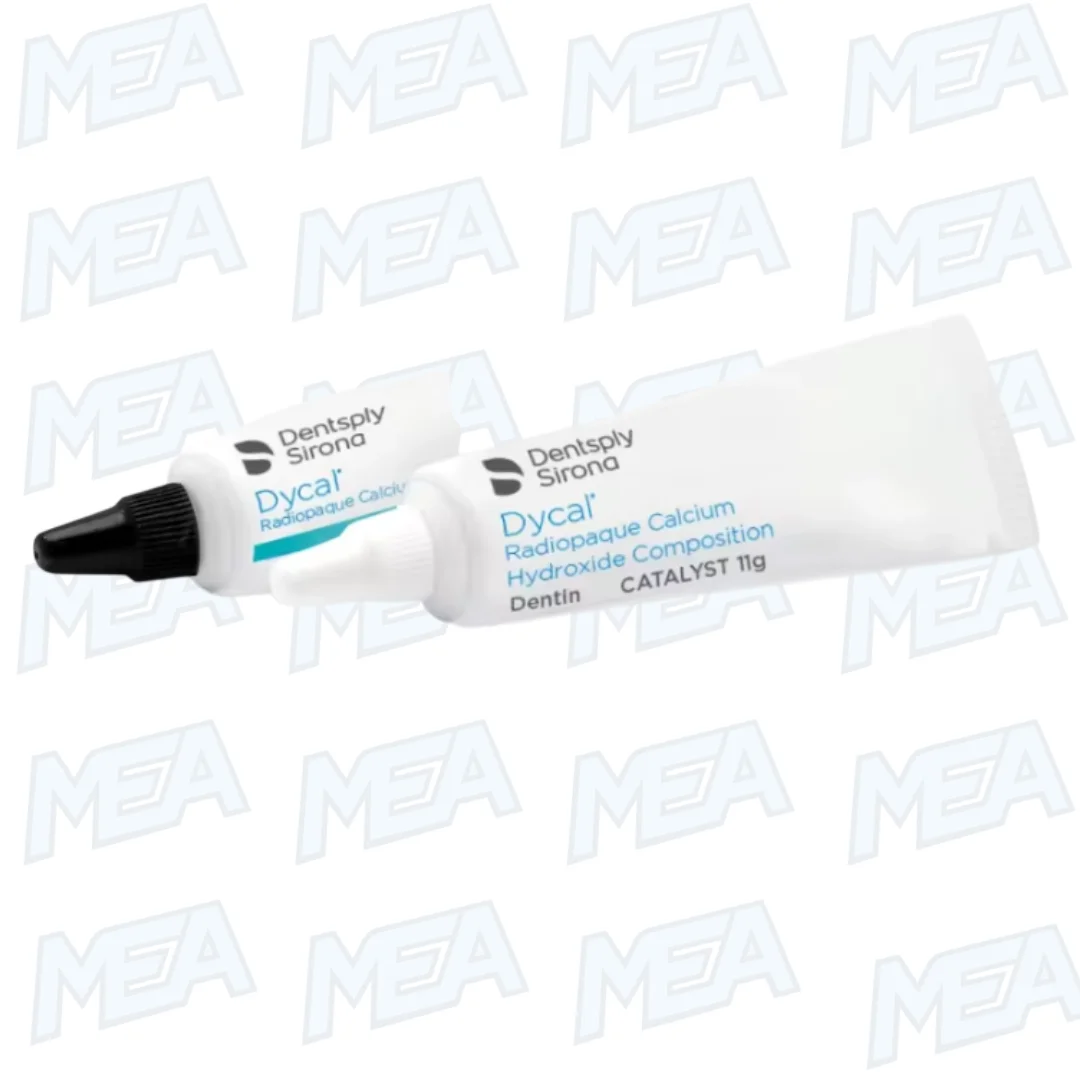
This professional dental material is supplied as a two-paste system consisting of 13g Base Paste and 11g Catalyst Paste, offering dentists precise handling, predictable setting characteristics, and strong mechanical performance. Dycal remains a gold standard for clinicians seeking a radiopaque calcium hydroxide liner that ensures pulp vitality and promotes reparative dentin formation.
Engineered to deliver consistency and reliability in clinical workflows, Dycal is suitable for both direct and indirect pulp capping procedures, making it an essential addition to modern dental practice supplies.
What is Dycal Calcium Hydroxide Composition?
Dycal is a rigid, self-setting calcium hydroxide dental composition used as:
- A pulp-capping material
- A protective liner
- A base under restorative materials
- A dentin replacement layer
- A pulp protection agent
The formulation is radiopaque, making it clearly visible on radiographs, enabling dentists to monitor treatment outcomes effectively. Its chemistry supports the natural formation of secondary dentin, helping preserve tooth vitality.
Unlike many traditional materials, Dycal does not interfere with polymerization of composite or acrylic restorative materials, ensuring compatibility with modern restorative techniques.
Why Dental Professionals Choose Dycal Liner
Dental clinicians worldwide trust Dycal due to its consistent performance and ease of use. Over decades, it has become a preferred solution for pulp protection and cavity lining.
Key Professional Advantages
✔ Encourages formation of reparative dentin
✔ Excellent pulp protection in deep cavities
✔ Compatible with composite and acrylic restorations
✔ Radiopaque for radiographic identification
✔ Reliable setting and handling characteristics
✔ Proven clinical performance over decades
✔ Easy mixing and placement
✔ Durable protective barrier under restorations
Designed for Modern Restorative Dentistry
Dycal Radiopaque Calcium Hydroxide Composition adapts well to contemporary restorative techniques and materials. It functions effectively beneath:
- Composite resin restorations
- Amalgam restorations
- Temporary fillings
- Acrylic restorations
- Indirect restorations
- Permanent restorative procedures
Because it does not inhibit composite polymerization, clinicians can confidently apply restorative materials directly over the liner.
Clinical Applications
Direct Pulp Capping
Used when pulp exposure occurs during cavity preparation or trauma, Dycal helps protect exposed pulp tissue while encouraging dentin bridge formation.
Indirect Pulp Capping
Applied in deep cavities where pulp exposure risk exists, providing a protective barrier while maintaining pulp vitality.
Protective Cavity Liner
Serves as a liner beneath restorative materials to reduce pulpal irritation caused by chemical or thermal stimuli.
Base Under Restorations
Acts as a base layer to shield pulp from restorative materials and occlusal forces.
Improved Physical Properties Over Traditional Materials
The Dycal formulation enhances clinical reliability through improved physical properties, including:
Higher Compressive Strength
Provides better support under restorations compared with older calcium hydroxide formulations.
Reduced Solubility
Ensures longevity of the protective liner within the cavity.
Dimensional Stability
Maintains integrity after placement, ensuring continued pulp protection.
Reliable Set
Quick, consistent setting supports efficient workflow in busy practices.
Handling Characteristics Dentists Appreciate
One reason Dycal remains widely used is its excellent clinical handling.
Smooth Mixing
Base and catalyst blend easily to produce a uniform consistency.
Adequate Working Time
Allows proper placement without rushing.
Quick Setting
Minimizes waiting time before restoration placement.
Controlled Flow
Material remains where placed without excessive slumping.
Product Specifications
| Specification | Detail |
| Material Type | Radiopaque Calcium Hydroxide Composition |
| Mixing Time | 10 seconds |
| Working Time | 2 minutes 20 seconds |
| Setting Time | 2½–3½ minutes |
| Mixing Ratio | Base: Catalyst 1.17g : 1.0g |
| Application | Pulp capping & cavity lining |
| Radiopacity | Yes |
| Polymerization Interference | No |
Packaging Includes
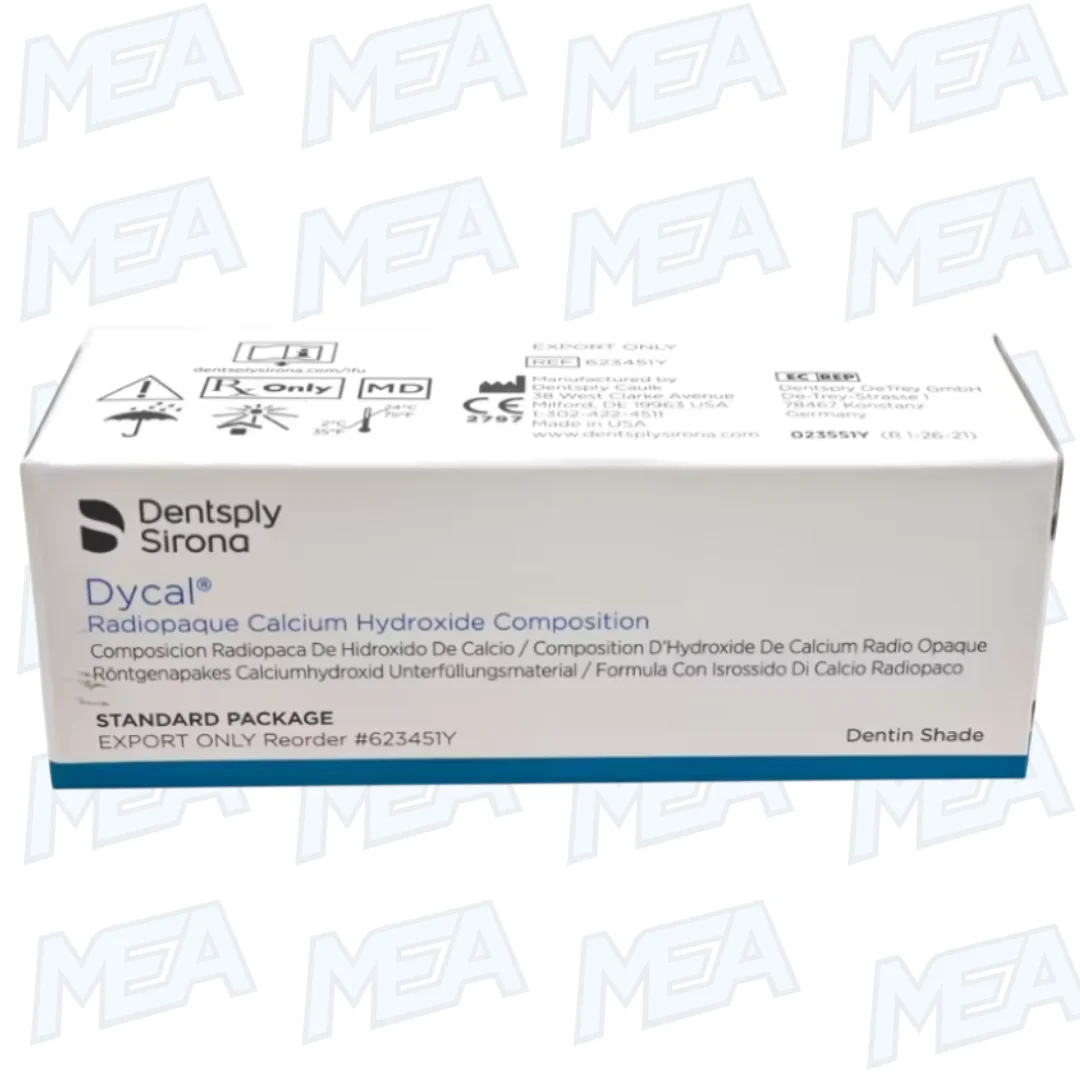
- 1 × Tube Base Paste (13g)
- 1 × Tube Catalyst Paste (11g)
- 1 × Mixing Pad
Packaging is designed for efficient clinical use and convenient storage.
Compatibility with Restorative Materials
Dycal is compatible with a wide range of restorative materials, including:
- Composite resin restorations
- Glass ionomer systems
- Temporary filling materials
- Acrylic restorations
- Amalgam restorations
It integrates seamlessly into restorative workflows without compromising restorative integrity.
Biological Benefits of Calcium Hydroxide Liner
Calcium hydroxide has long been valued in dentistry for its biological properties.
Supports Dentin Formation
Encourages formation of secondary or reparative dentin.
Antibacterial Environment
High pH helps reduce bacterial activity near the pulp.
Pulp Vitality Preservation
Protects pulp tissue and supports healing responses.
Barrier Formation
Helps isolate pulp from restorative materials.
Ideal for Dental Clinics and Institutions
Dycal is suitable for use in:
- General dental practices
- Specialty clinics
- Dental hospitals
- Dental schools
- Teaching institutions
- Public health dental programs
Its proven track record makes it an essential clinical material.
Efficient Workflow Integration
Dycal supports clinical efficiency through:
- Fast mixing
- Predictable set time
- Easy application
- Minimal cleanup
- Consistent results
Dentists can maintain appointment flow without compromising treatment quality.
Storage and Handling Recommendations
For optimal performance:
- Store at room temperature
- Keep tubes tightly closed
- Avoid excessive heat exposure
- Use clean mixing surfaces
- Dispense equal paste lengths for correct ratio
Proper storage ensures consistent material performance.
Why Dycal Continues to Be a Market Leader
Despite newer materials entering the market, Dycal remains widely trusted due to:
- Long clinical history
- Reliable performance
- Ease of handling
- Strong scientific foundation
- Wide professional acceptance
- Excellent clinical outcomes
Clinicians often rely on materials with predictable results, and Dycal continues to deliver.
Suitable Procedures Using Dycal
Common procedures include:
- Deep cavity restorations
- Caries management
- Trauma treatment
- Temporary restorations
- Pulp exposure management
- Tooth vitality preservation procedures
Benefits for Patients
While primarily selected for clinical reasons, patients also benefit from:
- Improved tooth vitality preservation
- Reduced post-operative sensitivity
- Long-lasting restorations
- Reduced need for future endodontic treatment
Why Purchase Dycal for Your Practice
Dental professionals seeking reliable pulp protection materials often choose Dycal due to:
- Trusted brand reputation
- Clinically proven success
- Consistent material quality
- Efficient handling
- Wide compatibility
Frequently Asked Questions
What is Dycal Calcium Hydroxide used for?
Dycal is used primarily for direct and indirect pulp capping and as a protective cavity liner under restorations.
Does Dycal interfere with composite restorations?
No, it does not inhibit polymerization of composite or acrylic restorative materials.
Is Dycal visible on X-rays?
Yes, the material is radiopaque and can be seen on radiographs.
How fast does Dycal set?
The material sets in approximately 2 1⁄2 to 3 1⁄2 minutes.
Can Dycal be used under amalgam fillings?
Yes, it is compatible with amalgam and composite restorations.
Does Dycal promote dentin formation?
Yes, it stimulates formation of secondary dentin.
How long is the working time?
Working time is about 2 minutes and 20 seconds.
Is special equipment required for mixing?
No special equipment is needed; mixing can be done using the provided pad.
Can Dycal be used for pediatric dentistry?
Yes, it is suitable for both adult and pediatric restorative procedures.
How should Dycal be stored?
Store at room temperature in tightly sealed tubes away from excessive heat.

Reviews
There are no reviews yet.