


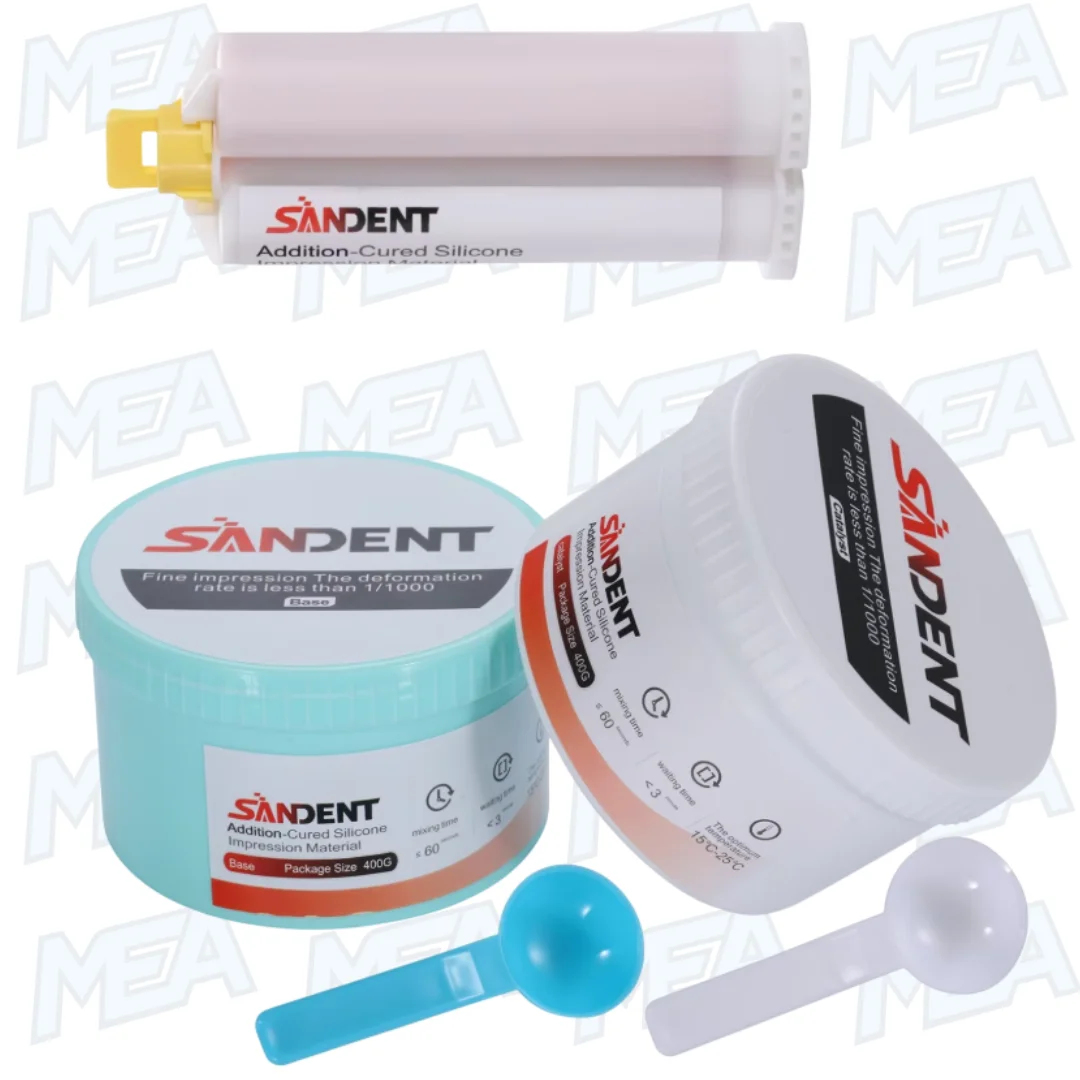
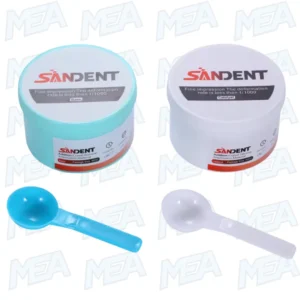
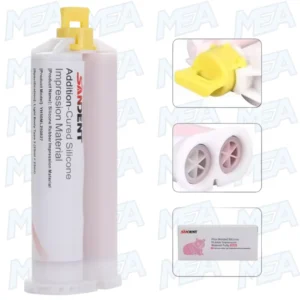
The Dental Putty VPS Impression Material is a professional-grade dental impression solution engineered to deliver high-precision impressions, excellent dimensional stability, and reliable performance in modern dental clinics and laboratories.
Designed with advanced hydrophilic silicone technology, this system ensures accurate capture of fine oral structures, making it suitable for crown, bridge, implant, orthodontic, and prosthodontic procedures.
This kit combines heavy body (putty) and light body elastomeric impression materials, enabling dentists to perform two-step or simultaneous impression techniques with confidence. Whether you operate a busy clinic or a specialized dental lab, SANDENT VPS impression material helps achieve consistent clinical results with minimal distortion and patient discomfort.
Professional Dental Impression Material for Accurate Clinical Results
Dental impressions remain one of the most crucial steps in restorative and prosthetic dentistry. An inaccurate impression results in poor fitting restorations, repeated appointments, and patient dissatisfaction.
The SANDENT PVS putty and light body impression material system is engineered to solve these problems through:
- Excellent flow characteristics
• High tear resistance
• Accurate detail reproduction
• Fast setting performance
• Hydrophilic moisture tolerance
• Elastic recovery after removal
The system allows clinicians to capture extremely fine margins, gingival contours, and occlusal anatomy with minimal distortion.
What Is Included in the Package
The kit is designed as a complete dental impression solution, eliminating the need for separate purchases.
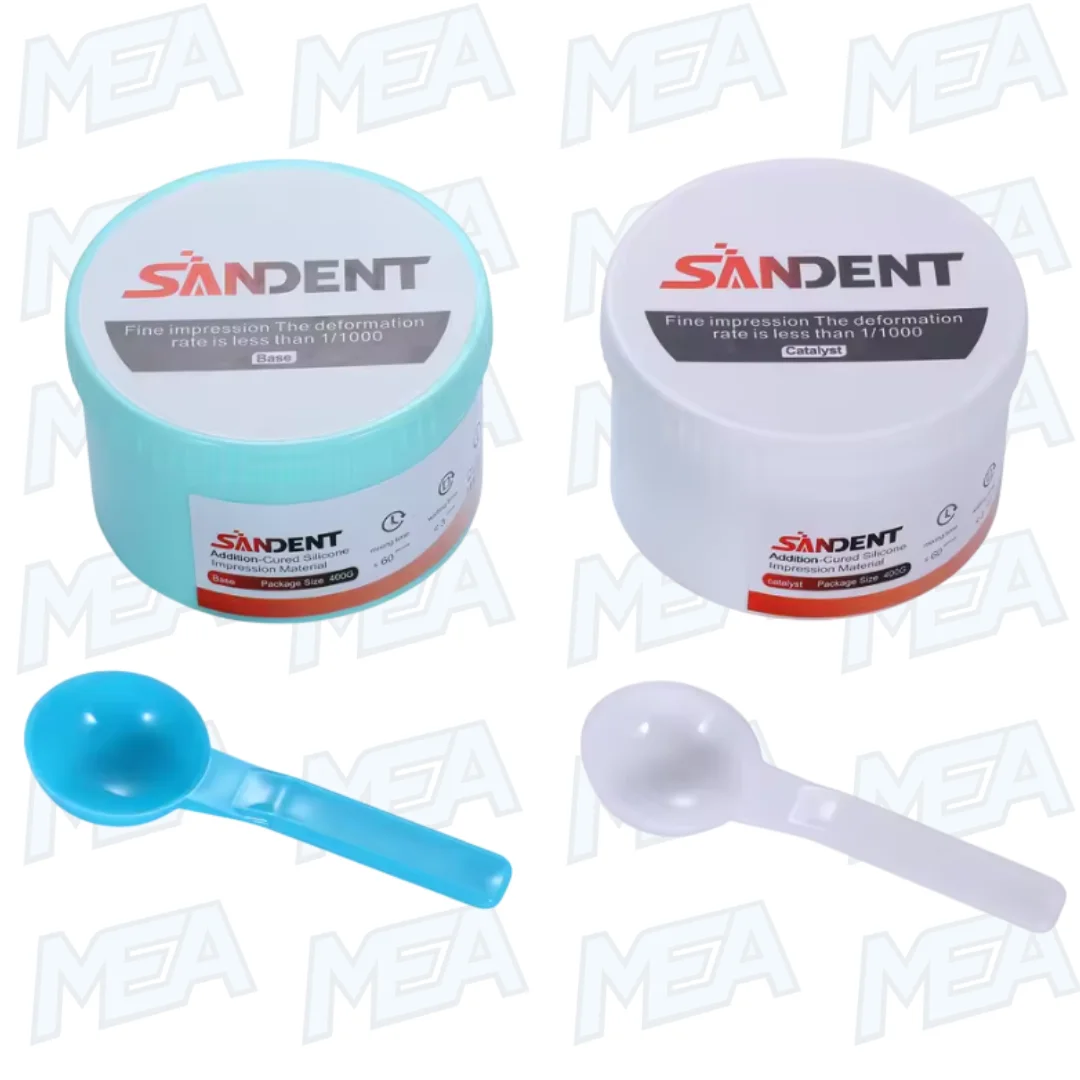
Heavy Body Putty Set Includes
- 400g Base Impression Putty
- 400g Catalyst Putty
- Mixing spoons (one pair)
- Storage packing box
- User manual
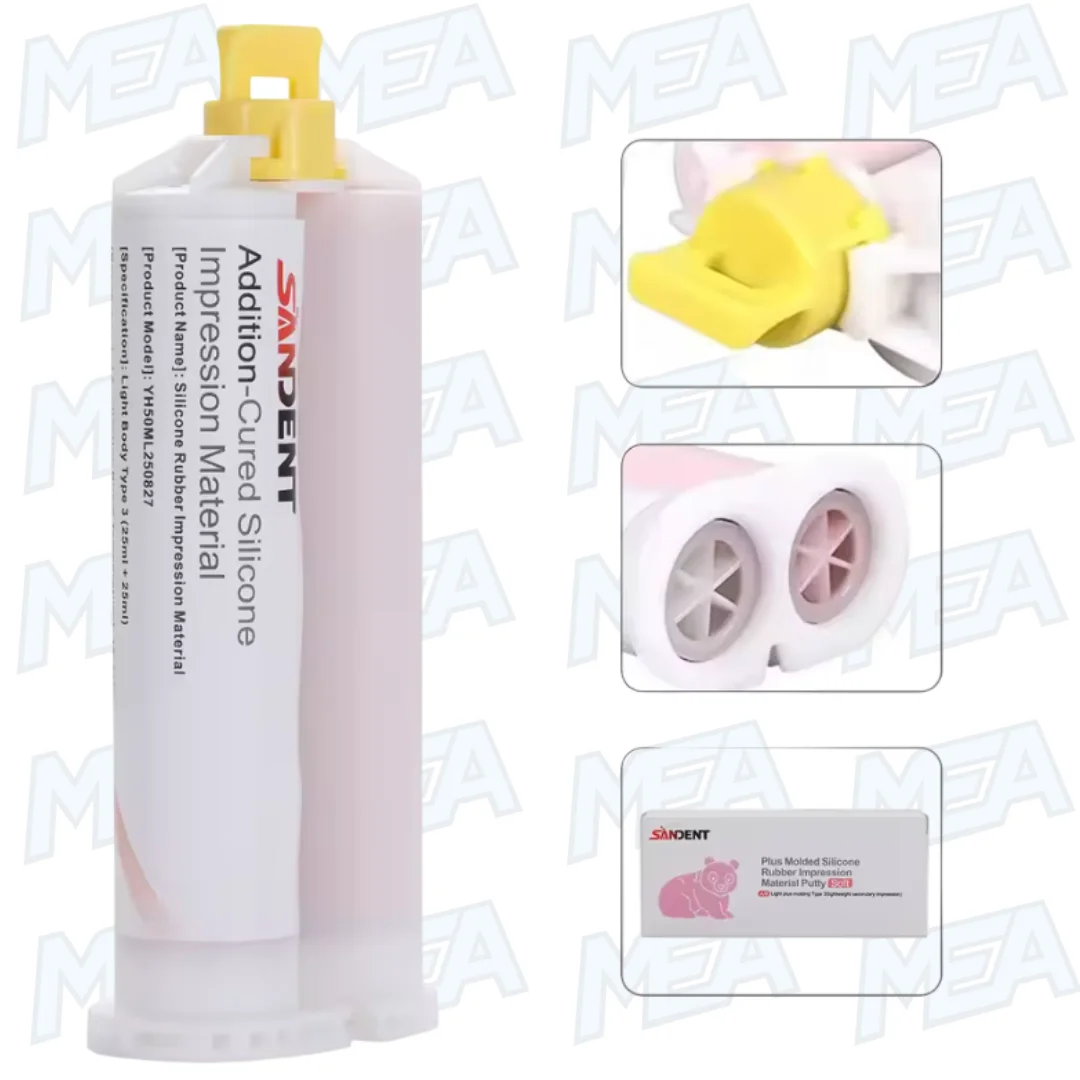
Light Body Set Includes
- 2 × 25ml bio cartridges (orange shade)
- User manual
This configuration allows dentists to perform both primary and secondary impressions efficiently.
Advanced Elastomeric VPS Silicone Technology
SANDENT impression material is based on Vinyl Polysiloxane (VPS) or Polyvinyl Siloxane (PVS) elastomeric silicone chemistry, widely regarded as the gold standard in dental impressions.
Benefits of VPS Impression Materials
Compared with older impression materials such as alginate or condensation silicones, VPS offers:
- Superior dimensional stability
• Minimal shrinkage
• Long storage stability of impressions
• Excellent elastic recovery
• High tear resistance
• Better detail reproduction
This makes VPS ideal for cases where accuracy is critical.
Fast Setting Formula for Efficient Workflow
Time efficiency matters in busy dental practices. SANDENT’s fast-set formulation allows clinicians to reduce chair time without sacrificing precision.
The typical workflow allows impressions to set within approximately three minutes, enabling quick removal and faster case turnaround.
Benefits include:
- Reduced patient discomfort
• Increased clinic efficiency
• Faster laboratory processing
• More appointments per day
Hydrophilic Properties for Moisture Control
One of the most common challenges in dental impressions is moisture contamination from saliva or blood.
The SANDENT hydrophilic silicone formulation improves:
- Flow into moist areas
• Margin detail capture
• Reduced void formation
• Better gingival reproduction
This makes it suitable even when perfect isolation is difficult to achieve.
Soft Elastomeric Texture for Patient Comfort
The soft consistency improves patient experience by:
- Reducing pressure discomfort
• Allowing easier tray insertion
• Minimizing gag reflex triggers
• Improving impression accuracy
Patient comfort often leads to better clinical cooperation and fewer retakes.
Two-Step Impression Technique Compatibility
The kit supports professional dental workflows using a two-stage impression technique:
Step 1
Primary Impression (Heavy Body Putty)
Heavy body putty is mixed and loaded into a tray to capture general dental anatomy.
Step 2
Secondary Impression (Light Body)
Light body material is injected over prepared teeth and inside the preliminary impression to capture fine detail.
This technique produces:
- Precise margins
• Accurate occlusion records
• Reduced distortion
• Better final prosthesis fit
Clinical Applications
SANDENT Dental Putty VPS Impression Material is widely used in:
- Crown and bridge impressions
• Dental implant impressions
• Orthodontic appliance fabrication
• Partial denture impressions
• Complete denture impressions
• Diagnostic study models
• Inlay and onlay restorations
• Veneer preparations
The material’s dimensional stability allows impressions to be poured later without distortion.
Key Features and Benefits
High Detail Reproduction
Captures fine anatomical structures for accurate restorations.
Excellent Elastic Recovery
Returns to original shape after removal from undercuts.
High Tear Strength
Reduces risk of impression tearing during removal.
Easy Mixing Ratio
Putty base and catalyst mix easily in 1:1 ratio.
Smooth Handling
Allows convenient tray loading and adaptation.
Long Storage Stability
Impressions remain dimensionally accurate for delayed pouring.
Handling and Clinical Instructions Summary
- Prepare tray with proper spacing.
- Mix heavy body putty in equal portions.
- Load tray and take initial impression.
- Trim impression for secondary step.
- Inject light body material.
- Reinsert tray for final impression.
- Allow curing before removal.
This workflow ensures precision and repeatable results.
Ideal for Dental Clinics and Laboratories
This material is suitable for:
- General dentists
• Prosthodontists
• Orthodontists
• Dental surgeons
• Dental laboratories
• Academic dental institutions
Its versatility makes it ideal for daily clinical use.
Storage and Shelf Life Benefits
The silicone formulation offers:
- Long shelf life when stored properly
• Stable chemical composition
• Resistance to deformation
Proper storage ensures consistent performance over time.
Why Dental Professionals Choose SANDENT Impression Materials
Clinicians prefer this material due to:
- Reliable accuracy
• Affordable pricing
• Professional performance
• Fast setting capability
• Moisture tolerance
The combination of quality and value makes it a preferred option in competitive markets.
Comparison with Traditional Impression Materials
| Feature | VPS Putty | Alginate | Condensation Silicone |
| Dimensional stability | Excellent | Poor | Moderate |
| Tear resistance | High | Low | Moderate |
| Accuracy | High | Moderate | Moderate |
| Storage stability | Long | Short | Moderate |
| Elastic recovery | Excellent | Low | Moderate |
VPS materials outperform alternatives in precision dentistry.
Clinical Efficiency Advantages
Using SANDENT VPS impression material helps clinics:
- Reduce remakes
• Improve restoration fit
• Save chair time
• Enhance patient satisfaction
• Increase workflow efficiency
This directly contributes to improved clinic profitability.
Packaging Designed for Convenience
The packaging protects materials from contamination while ensuring:
- Easy storage
• Controlled usage
• Clean mixing process
• Organized clinical workflow
Frequently Asked Questions
Is this material suitable for implant impressions?
Yes, the high dimensional stability makes it suitable for implant and prosthetic impressions.
Does this impression material work in moist conditions?
Yes, hydrophilic properties allow better performance in moist oral environments.
Can impressions be poured later?
Yes, VPS impressions remain stable for delayed pouring.
Is the material safe for patients?
Yes, it is formulated for dental clinical use and safe when used correctly.
Does it require special mixing equipment?
No, heavy body putty mixes manually while light body uses cartridges.
Can beginners use this product?
Yes, the handling properties make it suitable for both new and experienced clinicians.
Does the material distort easily?
No, elastic recovery prevents distortion after removal.
How long is the setting time?
Typically around three minutes in clinical conditions.
Can it be used for dentures?
Yes, suitable for both partial and complete dentures.
Does the product have a strong odor or taste?
No, patient acceptance is generally very good.
Reviews
There are no reviews yet.