

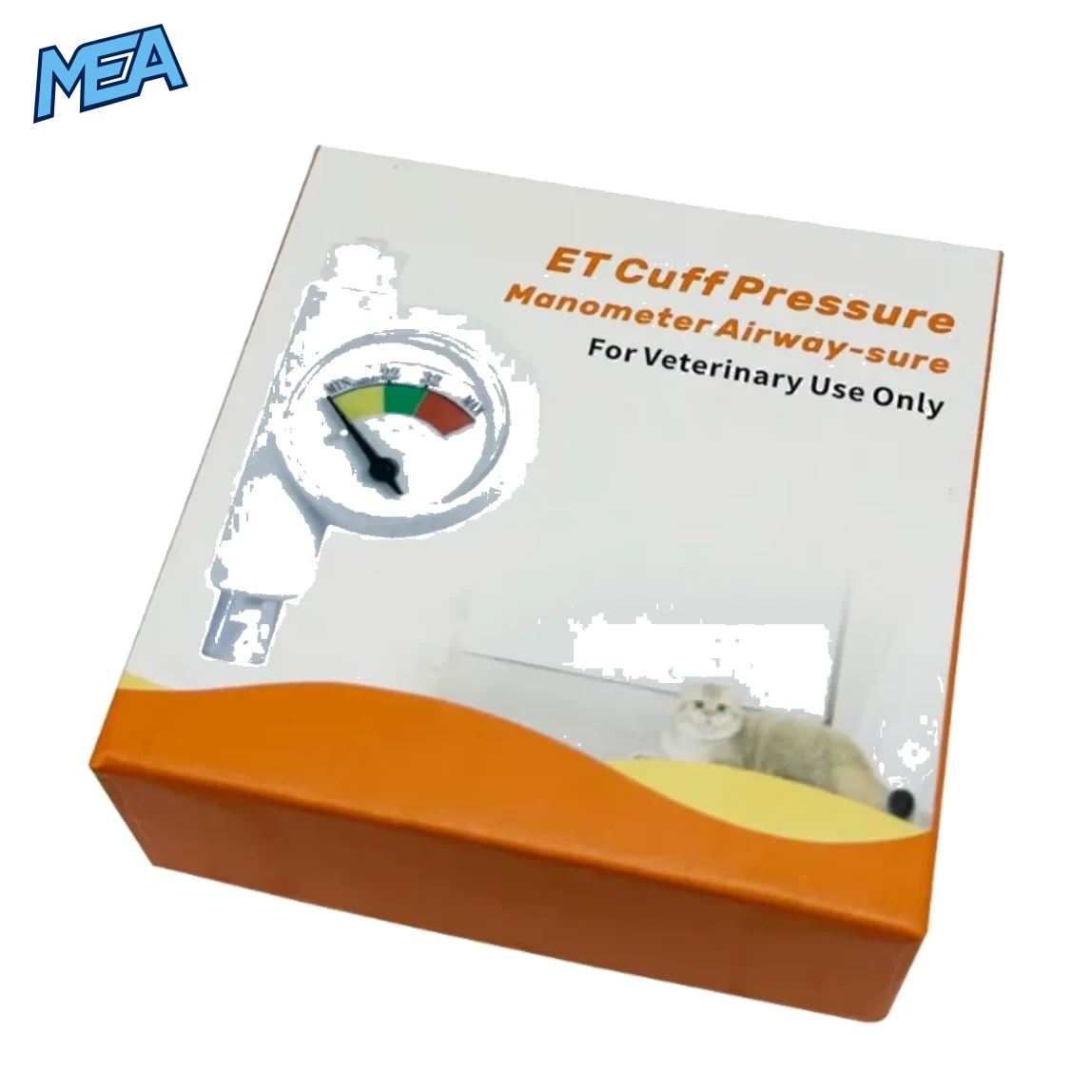
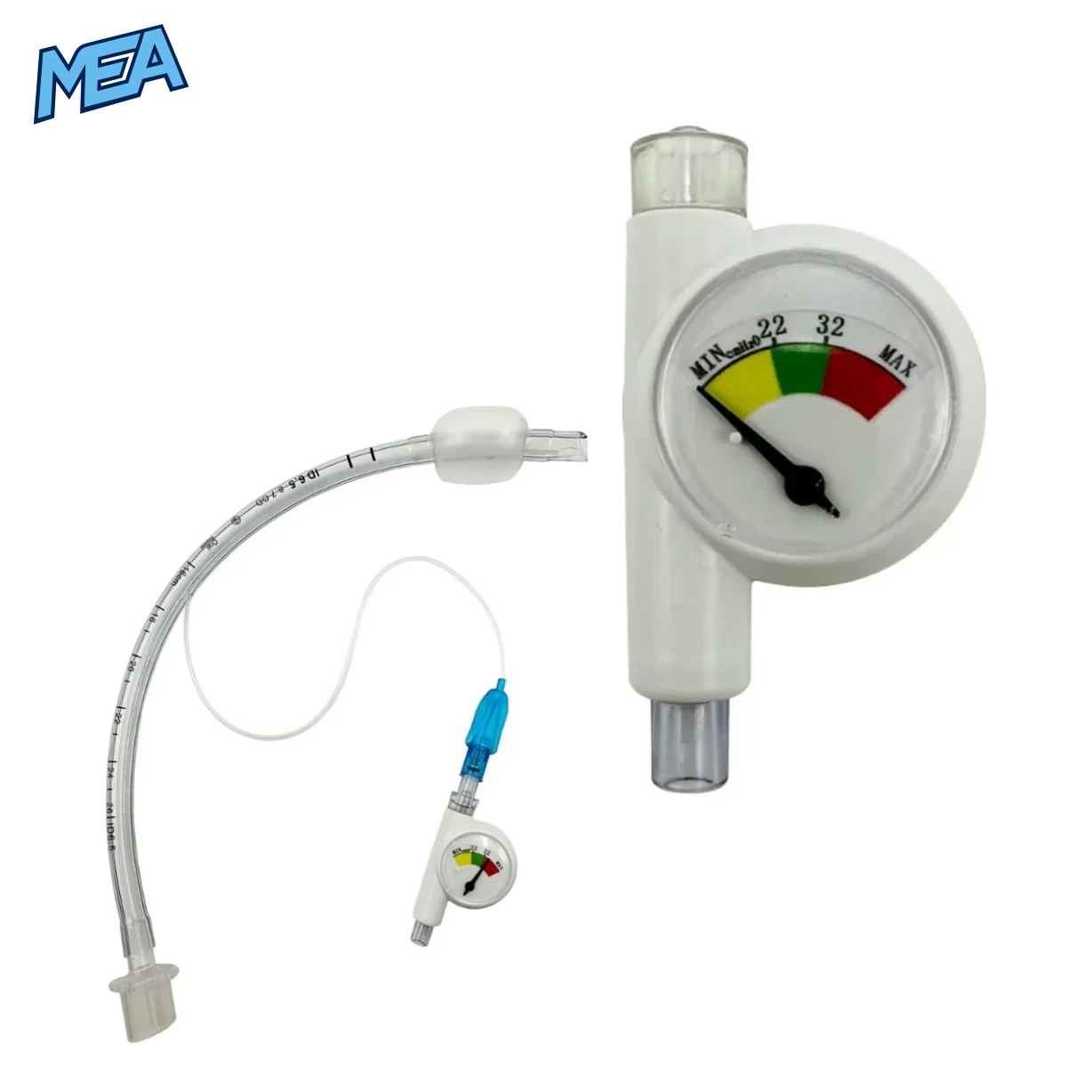


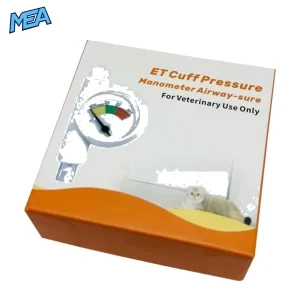
The ET Cuff Pressure Manometer Airway-Sure is a compact endotracheal tube (ETT) cuff pressure manometer for veterinary use designed to measure and monitor intracuff pressure during tracheal intubation and anesthesia. Its easy-to-read dial helps veterinary professionals identify low, target, and excessive cuff pressure so the ETT cuff can be adjusted appropriately.
Maintaining appropriate endotracheal tube cuff pressure is an important part of airway management during anesthesia and positive-pressure ventilation. The Airway-Sure manometer provides a direct pressure reading through a simple dial interface, allowing the practitioner to check cuff pressure during and after ETT inflation.
The gauge uses clearly marked pressure zones to make pressure assessment quick and intuitive:
- Yellow zone: Low cuff pressure / possible inadequate seal
- Green zone: Suggested sealing and safe-pressure range
- Red zone: Excessive cuff pressure / over-inflation
The gauge markings include MIN, 22, 32, and MAX, with pressure measured in cmH₂O.
Product Specifications
| Specification | Details |
| Product Type | ET Cuff Pressure Manometer |
| Product Name | Airway-Sure |
| Application | Veterinary airway management |
| Primary Function | ETT cuff pressure measurement and monitoring |
| Display Type | Analog dial manometer |
| Pressure Unit | cmH₂O |
| Gauge Markings | MIN, 22, 32, MAX |
| Suggested Marked Range | 22–32 cmH₂O |
| Accuracy | ±2 cmH₂O |
| Pressure Zones | Yellow, Green, Red |
| Connection | ETT cuff inflation port / syringe or injector |
| Design | Compact and lightweight |
| Use | Veterinary intubation and anesthesia |
| Monitoring | Real-time intracuff pressure indication |
Key Features and Benefits
Real-Time ETT Cuff Pressure Monitoring
The ETT cuff pressure gauge can remain connected to the ETT inflation port after the desired pressure has been established, allowing the practitioner to monitor pressure during the relevant period of airway management.
Easy-to-Read Dial Display
The analog manometer provides a numerical pressure reading with colour-coded zones. This makes it easier to recognise whether the cuff pressure is low, within the desired range, or excessive.
Compact and Portable Design
The pocket-sized construction makes the Airway-Sure convenient for veterinary clinics, operating rooms, anesthesia workstations, procedure areas, and bedside use.
Helps Support Controlled Cuff Inflation
The manometer can be used with an injector or syringe to add or withdraw air until the desired ETT cuff pressure is reached.
Designed for Veterinary Airway Management
This model is intended for veterinary use and is suitable for monitoring cuff pressure in cuffed endotracheal airways during animal anesthesia and airway management.
Why Use an ETT Cuff Pressure Manometer?
Incorrect ETT cuff inflation can create airway-management problems. Excessive cuff pressure may place unnecessary pressure on the tracheal wall, while insufficient pressure may result in an inadequate seal and leakage around the tube.
Using an endotracheal tube cuff pressure manometer allows the practitioner to measure pressure rather than relying solely on subjective assessment of cuff inflation.
Potential advantages include:
- Provides an objective cuff-pressure measurement
- Helps identify under-inflation and over-inflation
- Supports consistent ETT cuff management
- Helps maintain an appropriate airway seal
- Useful during veterinary anesthesia and positive-pressure ventilation
- Allows pressure to be checked throughout the intubation process
Important:
The appropriate ETT cuff pressure should be determined according to the animal, airway device, clinical circumstances, and applicable veterinary or institutional protocols. The 22–32 cmH₂O markings should not be treated as a universal target for every patient.
How to Use the Airway-Sure ETT Manometer
1. Prepare the Manometer
Remove the ET Cuff Pressure Manometer Airway-Sure from its packaging and prepare it for connection.
2. Connect to the ETT Inflation Port
Attach the manometer to the endotracheal tube’s cuff inflation port.
3. Connect the Air Source
Connect the other side of the manometer to the appropriate syringe or injector.
4. Adjust the Cuff Pressure
Inject or withdraw air as necessary while observing the manometer reading. Adjust the cuff until the pressure prescribed by the veterinary practitioner or applicable clinical protocol is achieved.
5. Verify the Pressure
Use the dial reading and colour-coded zones to assess the current intracuff pressure.
6. Continue Monitoring
After achieving the desired pressure, remove the syringe or injector while keeping the manometer connected when continuous or repeated pressure observation is required.
Airway-Sure Manometer Pressure Zones
| Gauge Zone | Indication | Clinical Meaning |
| Yellow | Low pressure | May indicate insufficient cuff inflation or inadequate seal |
| Green | Target zone | Suggested pressure range for cuff sealing |
| Red | High pressure | Indicates excessive cuff inflation |
| MIN / MAX | Gauge limits | Indicates the lower and upper ends of the displayed pressure range |
Veterinary Applications and Use Cases
The veterinary ETT cuff pressure manometer can be useful in settings where cuffed endotracheal tubes are used, including:
- Veterinary anesthesia
- Animal surgical procedures
- Tracheal intubation
- Positive-pressure ventilation
- Veterinary operating rooms
- Clinical airway management
- Recovery and post-anesthesia monitoring
- Veterinary clinics and animal hospitals
What Makes This ETT Cuff Pressure Gauge Useful?
The Airway-Sure combines a numerical dial, colour-coded pressure zones, compact construction, and direct ETT connection in a simple airway-management instrument.
Instead of estimating cuff inflation by feel alone, the practitioner can obtain a measurable pressure indication and make controlled adjustments when necessary.
Buyer Benefits at a Glance
- Objective measurement: Directly displays ETT cuff pressure.
- Easy interpretation: Colour-coded zones simplify pressure assessment.
- Portable: Small design is convenient for clinical environments.
- Practical: Can remain connected for ongoing pressure observation.
- Versatile: Suitable for veterinary intubation and anesthesia workflows.
- Controlled inflation: Supports adding or withdrawing air while observing pressure.
Frequently Asked Questions
What is an ET cuff pressure manometer?
An ET cuff pressure manometer is a medical airway instrument used to measure the pressure inside the inflatable cuff of an endotracheal tube. It helps practitioners assess whether the cuff has been inflated appropriately.
What is the Airway-Sure manometer used for?
The Airway-Sure manometer is used for measuring and monitoring endotracheal tube cuff pressure during veterinary intubation, anesthesia, and airway management.
What do the yellow, green, and red zones mean?
The yellow zone indicates low cuff pressure, the green zone represents the suggested sealing range shown on the device, and the red zone indicates excessive cuff pressure.
What pressure does the Airway-Sure gauge indicate?
The gauge is marked with 22 and 32 cmH₂O reference points, with the supplied product information identifying 22–32 cmH₂O as its marked suggested range. Clinical targets should be determined according to the patient and applicable veterinary protocol.
Can the manometer be used during veterinary anesthesia?
Yes. The device is designed for veterinary use and can be incorporated into airway-management workflows involving cuffed endotracheal tubes during anesthesia.
Can the Airway-Sure detect changes in cuff pressure?
Yes. When connected to the ETT inflation port, the dial provides an indication of the current intracuff pressure, allowing pressure to be observed during the relevant monitoring period.
Does the manometer inflate the ETT cuff automatically?
No. The device is a pressure measurement and monitoring instrument. A syringe or appropriate injector is used to add or withdraw air while observing the manometer reading.
Why is measuring ETT cuff pressure important?
Measuring cuff pressure provides an objective way to assess cuff inflation. It can help practitioners identify pressure that is too low or too high rather than relying solely on subjective estimation.
Reviews
There are no reviews yet.