

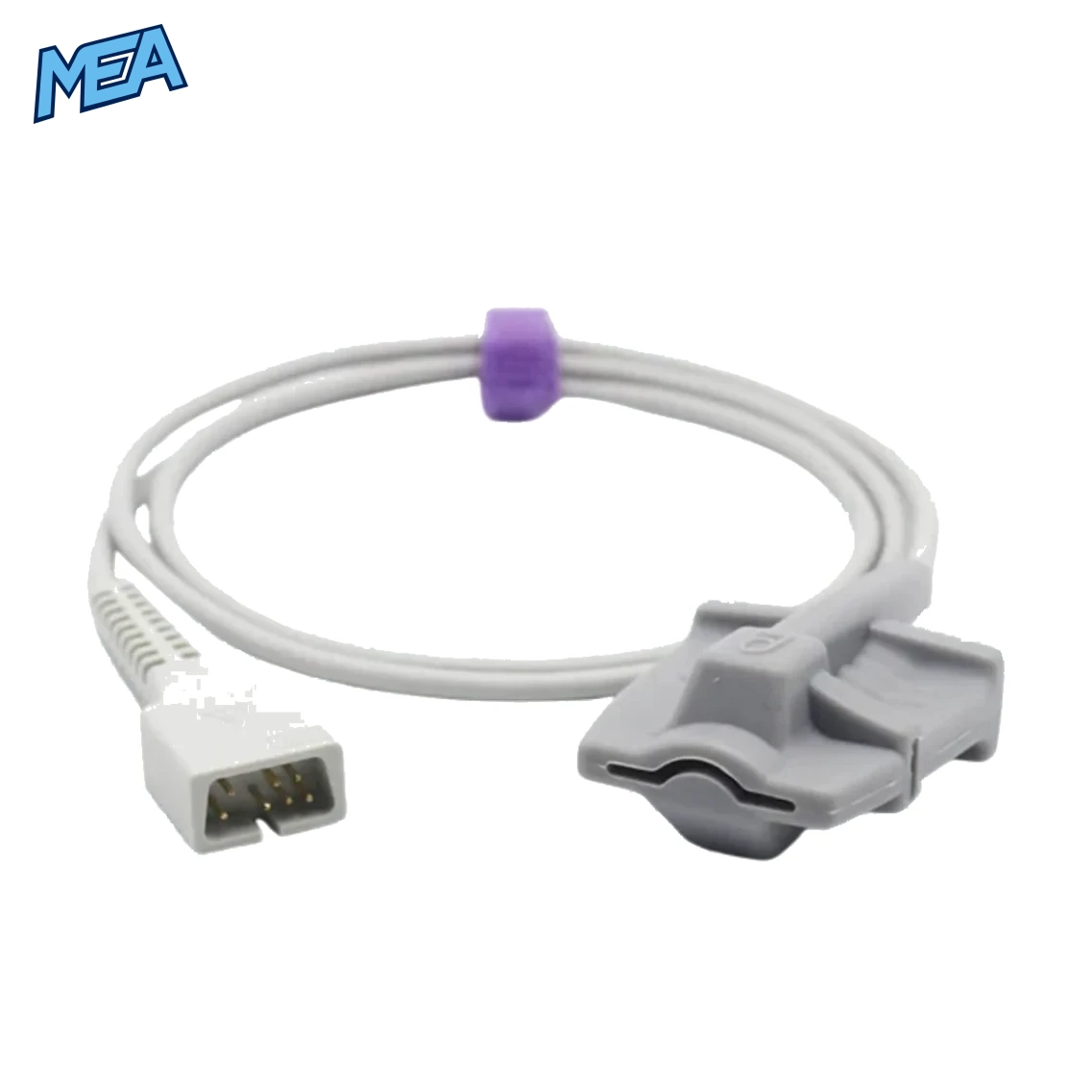
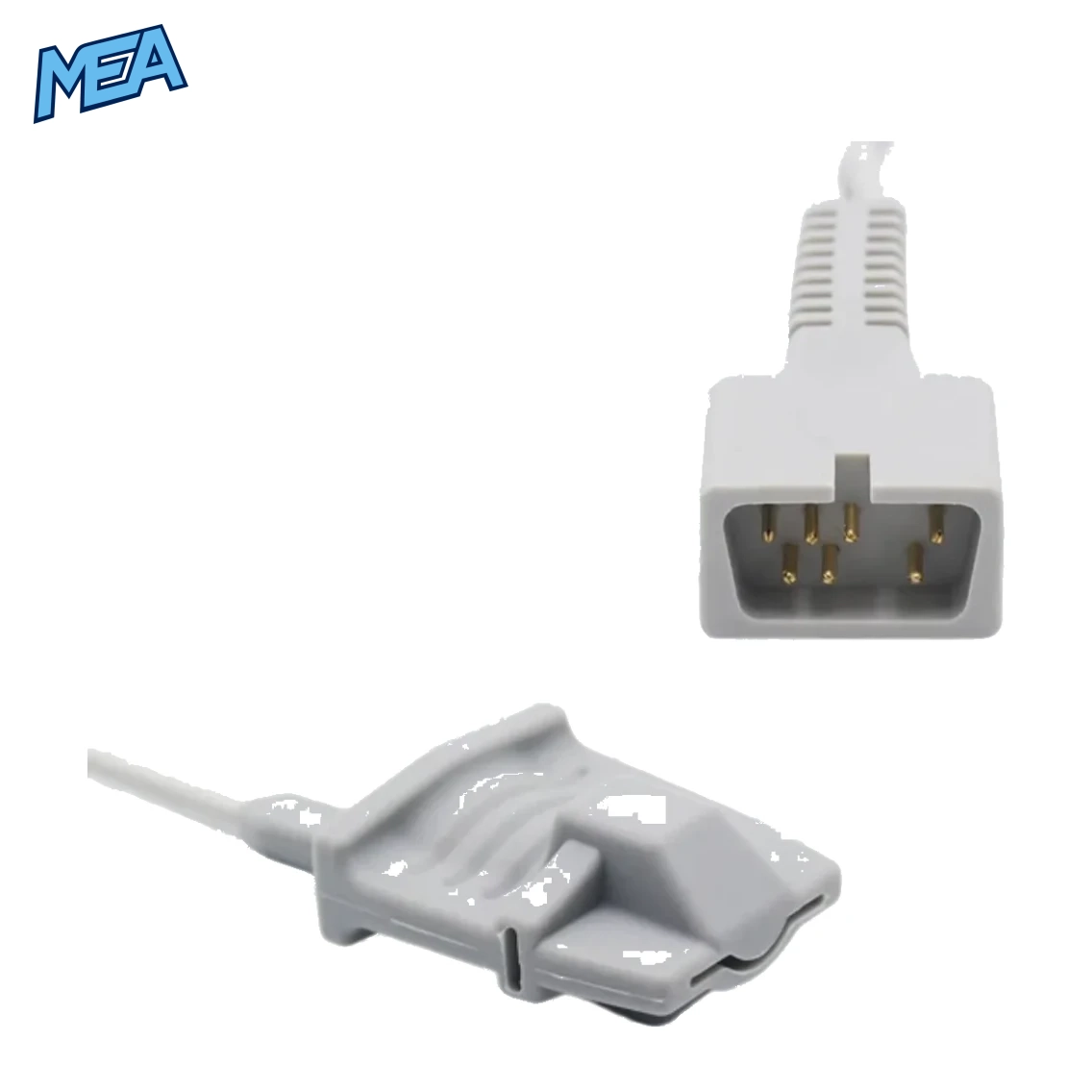


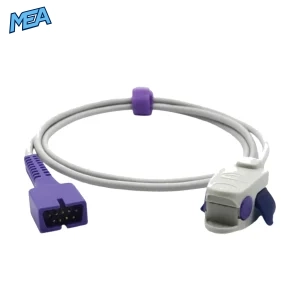
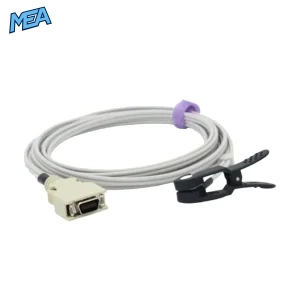
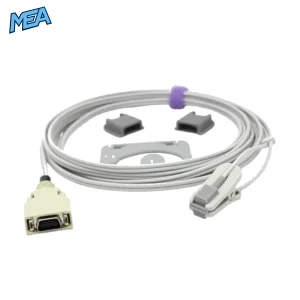
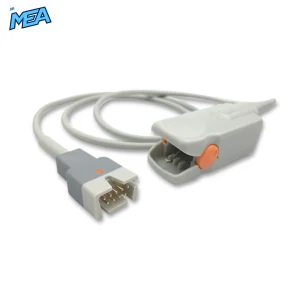
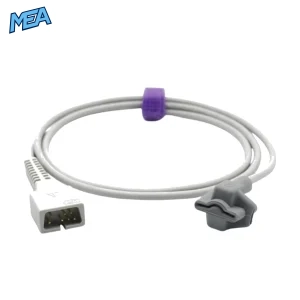
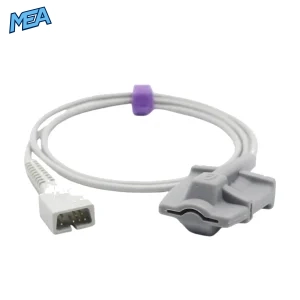
Nellcor Finger Soft SpO2 Sensor Non-oximax 3.2 ft 7 Pins Connector is a non-invasive photoplethysmographic (PPG) monitoring accessory used with supported Nellcor patient monitors. It uses infrared and red light-emitting diodes (LEDs) paired with a photodetector to measure light absorption through the peripheral tissue of the fingertip, allowing clinicians to continuously calculate peripheral oxygen saturation (SpO2) and pulse rate in real time.
This particular sensor model features:
- Non-OxiMax SpO2 technology — fits Nellcor monitors that do not utilise the OxiMax platform
- 3.2 ft (approximately 1 metre) cable length — provides sufficient reach for bedside and chair-side use without excessive slack
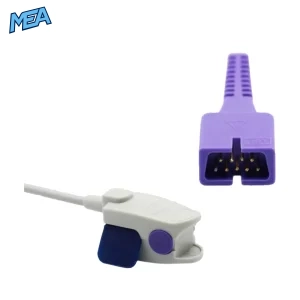
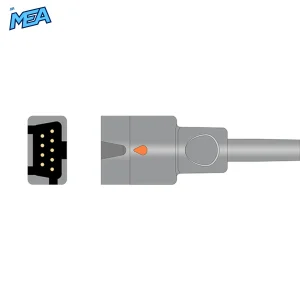
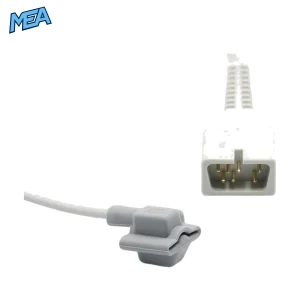
- Male 7-Pin D-Sub distal connector — ensures a secure, precise connection to Nellcor-supported monitoring systems
- 4 mm cable diameter with a TPU (Thermoplastic Polyurethane) jacket — flexible yet rugged, resistant to kinking, cracking, and daily clinical wear
- Adult soft proximal connector — designed for adult patients over 88 lbs for proper sensor sizing and optimal signal acquisition
Key Features of the Nellcor Non-OxiMax Finger Soft Adult SpO2 Sensor
1. Non-OxiMax Technology for Broad Nellcor Monitor Fitment
The Non-OxiMax SpO2 sensor technology used in this device is specifically designed for the earlier generation and select mid-range Nellcor patient monitors. Unlike OxiMax sensors, which require an OxiMax-enabled monitor to unlock advanced signal processing algorithms, Non-OxiMax sensors deliver reliable, clinically validated SpO2 readings on supported legacy and current Nellcor systems. This makes the sensor an ideal, budget-conscious replacement or backup sensor for facilities that continue to operate NPB-series monitors.
2. Soft Wraparound Adult Finger Design for Patient Comfort
One of the most praised attributes of the Nellcor adult finger soft SpO2 sensor is its ergonomic, wraparound design. The sensor gently envelops the fingertip using a soft, pliable material that accommodates a range of adult finger sizes without excessive tightening or pressure points. This is particularly beneficial during extended monitoring sessions — in post-operative recovery, overnight observation, or chronic care management — where patient comfort directly influences compliance and data quality. The soft sensor applies consistent, gentle pressure to maintain stable optical alignment between the LEDs and photodetector, reducing motion-induced signal noise.
3. Durable TPU Jacket Cable — 4 mm Diameter, 3.2 ft Length
The 3.2 ft TPU-jacketed cable of this Nellcor finger soft pulse oximetry sensor is purpose-built for the rigors of everyday clinical use. Thermoplastic Polyurethane (TPU) is widely regarded as one of the most durable and flexible materials used in medical-grade cabling. It resists:
- Repeated bending and flexing without developing stress fractures or internal wire breaks
- Exposure to cleaning agents and disinfectants commonly used in clinical settings
- Kinking that can impair signal transmission and shorten sensor lifespan
- Surface abrasion from contact with bedrails, IV poles, and other equipment
The 4 mm cable diameter strikes the ideal balance between flexibility and structural integrity, while the 3.2 ft length provides practical reach for most bedside monitoring setups without creating excessive cable clutter.
4. Male 7-Pin D-Sub Distal Connector — Secure, Reliable Signal Transmission
The Male 7-Pin D-Sub distal connector is the interface between the sensor cable and the patient monitor. This connector type is engineered for:
- Positive engagement — the D-Sub design locks securely into the monitor’s port, preventing accidental disconnection during patient movement
- Full electrical conductivity across all 7 pins — ensuring that both power supply and bidirectional signal data are transmitted without interruption
- Fitment precision — the 7-pin configuration is matched exactly to the supported NPB-series Nellcor monitors listed in the fit section
The robust metal-shelled connector housing protects the internal pins from bending and contamination, extending the useful service life of the sensor assembly.
5. Adult Patient Sizing (>88 lbs / >40 kg)
The proximal connector and sensor body of this device are calibrated for adult patients weighing more than 88 lbs (40 kg). The adult soft SpO2 sensor provides the appropriate LED-to-detector spacing and clamping force needed to generate a clean, artifact-free optical signal through the fingertip tissue of adult patients. Using a correctly sized sensor is not merely a matter of convenience — it is a clinical accuracy requirement. An incorrectly sized sensor can introduce signal distortion, leading to erroneous SpO2 readings and potentially inappropriate clinical decisions.
Fits These Models: Nellcor NPB-Series Patient Monitors
The Nellcor Finger Soft SpO2 Sensor Non-OxiMax 3.2 ft 7-Pin Connector fits the following Nellcor NPB-series patient monitors:
| Monitor Model | Series |
| NPB-20 | NPB Series |
| NPB-40 | NPB Series |
| NPB-75 | NPB Series |
| NPB-180 | NPB Series |
| NPB-185 | NPB Series |
| NPB-190 | NPB Series |
| NPB-195 | NPB Series |
| NPB-3900 | NPB Series |
| NPB-4000 | NPB Series |
Important Note: This sensor uses Non-OxiMax technology and is NOT fits Nellcor OxiMax-enabled monitors (e.g., N-595, N-600X, N-85, PM1000N). Always verify your monitor model before purchasing to ensure proper fit and accurate SpO2 measurement.
Technical Specifications at a Glance
| Specification | Detail |
| Target Keyword Product Name | Nellcor Finger Soft SpO2 Sensor Non-OxiMax 3.2 ft 7-Pin Connector |
| SpO2 Technology | Non-OxiMax |
| Cable Length | 3.2 ft (~1 metre) |
| Cable Diameter | 4 mm |
| Cable Material | TPU (Thermoplastic Polyurethane) Jacket |
| Distal Connector | Male 7-Pin D-Sub Connector |
| Proximal Connector | Adult Soft |
| Patient Size | Adult (>88 lbs / >40 kg) |
| Category | SpO2 / Pulse Oximetry |
| supported Monitors | NPB-20, NPB-40, NPB-75, NPB-180, NPB-185, NPB-190, NPB-195, NPB-3900, NPB-4000 |
Why Choose This Nellcor Non-OxiMax Adult SpO2 Sensor?
Clinical Reliability in Every Measurement
Healthcare providers depend on the consistency of their SpO2 monitoring accessories. The Nellcor finger soft pulse oximetry sensor is manufactured to meet the demanding performance standards expected in clinical environments, delivering reliable oxygen saturation readings that clinicians can trust when making time-sensitive decisions about patient care.
Cost-Effective Replacement for NPB-Series Monitors
If your facility operates Nellcor NPB-series monitors, sourcing a suitable non-OxiMax SpO2 replacement sensor is essential — and this sensor provides an outstanding value proposition. Rather than investing in full monitor upgrades, healthcare systems can extend the operational lifespan of existing NPB-series equipment by simply replacing worn or damaged sensors with this supported, high-quality unit.
Reduced Patient Discomfort During Extended Monitoring
The soft wraparound finger design significantly reduces the discomfort typically associated with rigid clip-style sensors, particularly during overnight monitoring or prolonged post-surgical observation. Patients are more likely to maintain proper sensor placement when the device is comfortable, which directly translates into fewer false alarms, fewer missed readings, and higher-quality clinical data.
TPU Cable Durability Reduces Replacement Frequency
The TPU-jacketed sensor cable is engineered for longevity. In high-throughput clinical settings where sensors are repeatedly connected, disconnected, cleaned, and repositioned, cable integrity is paramount. The thermoplastic polyurethane jacket resists the mechanical degradation that leads to internal wire breaks — one of the most common failure modes in reusable SpO2 sensors — substantially reducing the frequency and cost of sensor replacement.
How to Use the Nellcor Finger Soft SpO2 Sensor Non-OxiMax 3.2 ft 7-Pin Connector
- Verify fit — Confirm that your patient monitor is one of the supported NPB-series Nellcor models listed above.
- Inspect the sensor — Before each use, visually inspect the cable jacket, connector pins, and sensor body for any signs of damage, contamination, or deterioration. Do not use a damaged sensor.
- Prepare the patient’s finger — Select an appropriate finger (index or middle finger preferred). Remove nail polish if present, as dark or opaque nail coatings can interfere with the optical signal.
- Apply the sensor — Slide the adult soft sensor onto the patient’s fingertip so that the LED window is positioned over the nail and the detector is on the opposing (palmar) side of the fingertip.
- Connect to the monitor — Insert the Male 7-Pin D-Sub connector into the SpO2 port of the supported Nellcor NPB-series monitor. Ensure it seats fully and locks in place.
- Verify the waveform — On the monitor display, confirm that a clean plethysmographic waveform is displayed, indicating proper sensor placement and signal quality.
- Document and monitor — Begin monitoring and document SpO2 and pulse rate readings per your facility’s clinical protocols.
Frequently Asked Questions
Is this Nellcor Non-OxiMax SpO2 sensor fits the Nellcor N-595 or N-600X monitor?
No. The Nellcor N-595 and N-600X are OxiMax-platform monitors and require OxiMax-supported sensors. This non-OxiMax finger soft SpO2 sensor is designed exclusively for the NPB-series monitors: NPB-20, NPB-40, NPB-75, NPB-180, NPB-185, NPB-190, NPB-195, NPB-3900, and NPB-4000. Using an incompatible sensor can result in connection failure, erroneous readings, or monitor error messages. Always confirm your monitor model before ordering.
Can this sensor be used on pediatric patients?
No. This sensor is specifically sized and calibrated for adult patients weighing more than 88 lbs (40 kg). The LED-to-detector spacing, clamping force, and optical geometry of the adult soft sensor are optimised for adult fingertip anatomy. Using an adult sensor on a pediatric or neonatal patient can result in inaccurate SpO2 and pulse rate readings, potentially compromising clinical decision-making. Separate pediatric and neonatal Non-OxiMax sensors are available for smaller patients.
What does the 7-Pin D-Sub connector mean, and why does pin count matter?
The Male 7-Pin D-Sub connector refers to the physical interface on the end of the sensor cable that plugs into the patient monitor. “D-Sub” describes the trapezoidal (D-shaped) connector shell, and “7-pin” means there are seven individual electrical contact pins within that shell. Each pin serves a specific electrical function — carrying power, ground, LED drive signals, and photodetector output data. The pin count must match exactly between sensor and monitor; a 7-pin sensor cannot be used in a 9-pin or 15-pin monitor port, and vice versa. The 7-pin configuration is the standard for the supported NPB-series monitors listed in this product’s specifications.
How long is the cable on this Nellcor finger SpO2 sensor, and is it long enough for bedside use?
The cable measures 3.2 feet (approximately 1 metre) in length. This is a standard length for bedside pulse oximetry sensors in most acute care and clinical settings. It provides sufficient reach from the patient’s fingertip to a monitor positioned on a standard bedside table or IV pole bracket without creating excessive slack that could become a tripping or entanglement hazard. For applications requiring greater reach — such as operating room tables or specific ICU setups — extension cables may be used, though it is advisable to minimise unnecessary cable extensions to preserve signal integrity.
Is this Nellcor SpO2 sensor reusable or single-use?
This Nellcor Non-OxiMax adult soft finger sensor is designed as a reusable sensor. It can be cleaned between uses following the cleaning protocol described in the care and maintenance section of this guide. The durable TPU cable jacket and robust 7-pin D-Sub connector are engineered for repeated use in clinical environments. However, it should be regularly inspected for signs of wear, cable damage, or connector pin degradation, and replaced when any deterioration is observed.
Does nail polish affect the accuracy of this SpO2 sensor?
Yes. Dark, opaque, or metallic nail polish can interfere with the sensor’s optical signal by absorbing or reflecting the red and infrared light used to measure blood oxygen saturation. This can result in artificially low or erratic SpO2 readings. Clinical best practice recommends removing nail polish from the monitoring finger before applying the sensor. If nail polish removal is not feasible, the sensor may alternatively be applied to the side of the finger or another appropriate site, though this may affect signal quality. Clear nail polish generally has minimal impact on sensor accuracy.
What material is the cable jacket made of, and why does it matter?
The cable is jacketed in Thermoplastic Polyurethane (TPU), a premium medical-grade polymer chosen for its exceptional combination of flexibility, tensile strength, and chemical resistance. TPU outperforms standard PVC cable jackets in clinical settings because it withstands repeated bending cycles without cracking, resists degradation from alcohol-based disinfectants, and maintains its flexibility across a wide temperature range. This translates to a longer sensor service life, fewer cable-related failures, and reduced replacement costs for healthcare facilities — a meaningful advantage in high-volume clinical environments where sensors are subjected to intensive daily use.
How does the soft wraparound finger design improve SpO2 monitoring accuracy?
The adult soft wraparound sensor design improves SpO2 accuracy in several ways. First, it maintains consistent optical alignment between the LED emitters and the photodetector regardless of minor patient movement, reducing motion artifact. Second, the gentle, uniform pressure distribution across the fingertip minimises the risk of localized tissue compression that can impair capillary blood flow and distort the optical signal. Third, because the soft sensor is more comfortable than rigid clip-style sensors, patients are less likely to remove or dislodge it — maintaining continuous monitoring without interruption. The net result is higher-quality, more reliable SpO2 data for clinical assessment.
Reviews
There are no reviews yet.